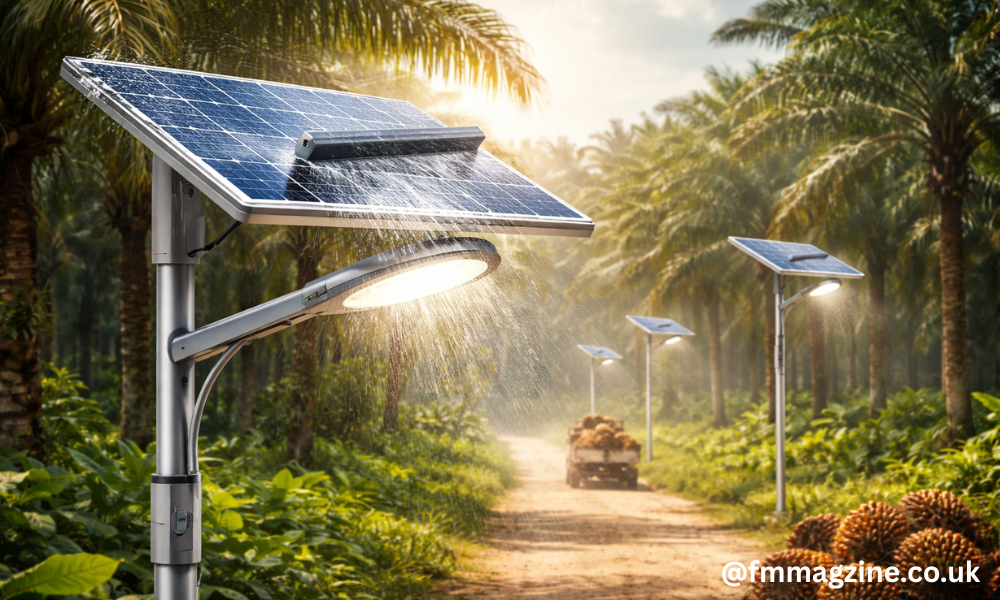
The concept of self cleaning street light palm oil technology is gaining attention as cities, rural communities, and agricultural regions look for smarter and more sustainable infrastructure. Street lighting plays a critical role in safety, mobility, and productivity, especially in areas connected to palm oil plantations and processing facilities. However, one common challenge with outdoor lighting systems—particularly solar-powered units—is dust, oil residue, humidity, and environmental buildup that reduces efficiency over time.
Self cleaning systems are designed to solve this problem automatically. When combined with palm oil–based biodegradable materials or deployed in palm oil–producing regions, these lighting systems become both practical and environmentally relevant. This article explains how self cleaning street light palm oil systems work, why they matter, and how they support long-term sustainable development.
Understanding Self Cleaning Street Lights
A self cleaning street light is an outdoor lighting unit equipped with an automated mechanism that removes dust, dirt, bird droppings, oil particles, and other debris from its surface. In most modern installations, these lights are solar-powered, meaning they rely on clean solar panels to generate electricity efficiently.
When dirt accumulates on solar panels, energy production drops. Even a thin layer of dust can significantly reduce performance. In humid agricultural zones, especially near palm oil plantations, airborne particles and oil mist can accelerate this buildup. Self cleaning systems are designed to address this issue without requiring frequent manual maintenance.
These systems may use mechanical wipers, rotating brushes, vibration technology, or hydrophobic nano-coatings that prevent particles from sticking. Some advanced designs include sensors that detect reduced light transmission and activate cleaning cycles automatically. This improves reliability and ensures consistent nighttime illumination.
The Connection Between Palm Oil And Lighting Technology
Palm oil is widely known as a vegetable oil used in food and consumer products, but its industrial applications extend much further. Derivatives of palm oil can be used to produce biodegradable surfactants, coatings, and lubricants. In the context of self cleaning street light palm oil systems, these derivatives may be used in environmentally friendly cleaning solutions or protective surface coatings.
In regions where palm oil production is a major industry, infrastructure solutions are often adapted to local environmental conditions. High humidity, heavy rainfall, and airborne organic particles create maintenance challenges for traditional lighting systems. Integrating palm oil–based biodegradable materials into coatings or maintenance processes supports sustainability goals while reducing dependence on petroleum-based chemicals.
When responsibly sourced, palm oil derivatives can contribute to circular economy models. Agricultural byproducts may be processed into useful industrial materials, reducing waste and supporting local economies.
How Self Cleaning Street Light Palm Oil Systems Work
Most self cleaning street light palm oil systems combine three core components: solar energy generation, LED lighting efficiency, and automated surface maintenance.
During the day, solar panels capture sunlight and convert it into electrical energy stored in rechargeable batteries. At night, high-efficiency LED lamps provide consistent illumination. LEDs are chosen because they consume less power, produce minimal heat, and have long operational lifespans.
The cleaning mechanism protects the solar panel surface. Mechanical systems may operate on scheduled intervals, such as once every few days. Hydrophobic coatings allow rainwater to wash away dust naturally. In more advanced units, IoT-based controllers monitor panel efficiency and trigger cleaning only when performance drops below a set threshold.
This integration ensures optimal energy harvesting, even in dusty plantation roads or industrial zones where oil particles are present in the air.
Why Palm Oil Plantation Areas Need This Innovation
Palm oil plantations are often located in tropical climates. These regions experience intense sunlight, high humidity, frequent rainfall, and organic debris from trees and processing plants. Such environmental factors can quickly reduce the effectiveness of traditional solar street lights.
Roads inside plantations are frequently used by workers, transport vehicles, and machinery during early mornings and late evenings. Reliable lighting improves safety, reduces accidents, and supports continuous operations. However, manual cleaning of dozens or hundreds of solar panels across large areas is costly and time-consuming.
Self cleaning street light palm oil solutions reduce this maintenance burden. By minimizing manual intervention, plantation managers can lower operational costs while maintaining strong lighting performance. This makes the technology especially suitable for remote agricultural zones.
Environmental And Sustainability Benefits
Sustainability is a key reason why many municipalities and agricultural operators are investing in solar lighting systems. Self cleaning technology strengthens these benefits.
First, solar-powered street lights reduce reliance on grid electricity and fossil fuels. Second, automated cleaning reduces the need for maintenance vehicles, which lowers fuel consumption and emissions. Third, when biodegradable palm oil–based materials are used in coatings or cleaning agents, environmental impact is further minimized.
It is important, however, that palm oil used in industrial applications comes from certified sustainable sources. Responsible sourcing helps prevent deforestation and protects biodiversity. When combined with renewable solar energy, responsibly sourced materials support broader environmental commitments.
Cost Efficiency And Long-term Savings
At first glance, self cleaning street lights may appear more expensive than conventional models. The additional components—motors, sensors, coatings, and control systems—add to the initial cost. However, long-term financial analysis often tells a different story.
Manual cleaning requires labor, equipment, and transportation. In remote plantation areas, sending maintenance teams can be particularly expensive. Over time, these recurring costs exceed the one-time investment in automated cleaning systems.
Moreover, consistent panel cleanliness ensures maximum energy generation. This means fewer battery replacements and more stable lighting output. Over several years, the reduction in downtime and maintenance can make self cleaning street light palm oil systems economically attractive.
Smart Technology Integration And Future Trends
Modern infrastructure increasingly relies on smart monitoring systems. Self cleaning street lights are evolving in the same direction. Many newer models integrate IoT modules that allow remote performance tracking.
Through centralized dashboards, operators can monitor battery levels, panel efficiency, light output, and cleaning cycles. If a fault occurs, alerts are sent automatically. This reduces response time and prevents prolonged outages.
In the future, we may see hybrid systems that combine solar energy with small-scale bioenergy solutions derived from agricultural waste. In palm oil–producing regions, biomass residues are abundant. Integrating renewable energy sources can strengthen energy independence and resilience.
As smart city concepts expand into rural and agricultural zones, technologies like self cleaning street light palm oil systems are likely to become more common.
Challenges And Practical Considerations
Despite the advantages, there are challenges to consider. Automated systems require proper installation and periodic inspection. Mechanical components must be durable enough to withstand tropical climates and heavy rainfall.
Another consideration is the quality of materials used in coatings and cleaning mechanisms. Low-quality components may fail prematurely, reducing reliability. Therefore, selecting reputable manufacturers and ensuring compliance with safety standards is essential.
Additionally, while palm oil derivatives can be environmentally friendly, transparency in sourcing remains important. Stakeholders should verify sustainability certifications to ensure that environmental goals are genuinely supported.
Conclusion
Self cleaning street light palm oil technology represents a practical response to real-world infrastructure challenges in palm oil–producing regions and other dusty, humid environments. By combining solar power, efficient LED lighting, automated cleaning systems, and biodegradable material innovations, this solution enhances reliability while supporting sustainability goals.
For plantation operators, rural communities, and municipalities seeking long-term efficiency, these systems offer a balance between environmental responsibility and operational practicality. Reduced maintenance, improved energy harvesting, and smarter monitoring make them a forward-thinking investment.
As renewable energy adoption continues to expand, technologies that maintain themselves and reduce resource waste will become increasingly valuable. When implemented responsibly and supported by sustainable sourcing practices, self cleaning street light palm oil systems can play a meaningful role in building safer, cleaner, and more resilient infrastructure for the future.
FAQ’S:
What Is A Self Cleaning Street Light Palm Oil System?
A self cleaning street light palm oil system is a solar-powered street lighting unit that automatically removes dust and debris from its panels and may use palm oil–based biodegradable materials in coatings or cleaning processes.
Why Is Self Cleaning Technology Important For Solar Street Lights?
Dust and dirt reduce solar panel efficiency. Self cleaning mechanisms help maintain maximum energy generation and ensure consistent nighttime lighting without frequent manual maintenance.
How Does Palm Oil Relate To This Lighting Technology?
Palm oil derivatives can be used to create biodegradable coatings or cleaning agents, especially in regions where palm oil production is common and sustainable materials are preferred.
Are Self Cleaning Street Lights More Expensive Than Regular Ones?
They usually have a higher initial cost, but they reduce long-term maintenance expenses and improve performance, which can make them cost-effective over time.
Where Are Self Cleaning Street Light Palm Oil Systems Most Useful?
They are especially beneficial in palm oil plantation areas, rural roads, and humid or dusty environments where regular cleaning would otherwise be difficult and costly.
Looking for more? Browse other articles on the site.
Disclaimer:
This article is for informational and educational purposes only. While every effort has been made to provide accurate and up-to-date information about self cleaning street light palm oil systems, the content should not be considered technical, legal, or investment advice. Readers are encouraged to consult qualified professionals or manufacturers before making any purchasing or implementation decisions. The author does not guarantee specific results from the use of any technology mentioned.