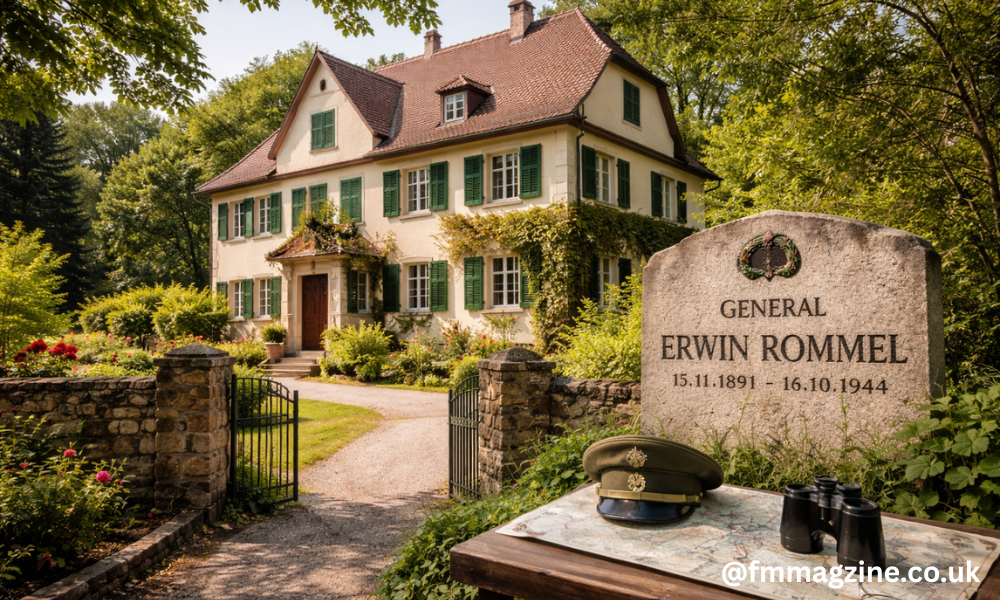
The phrase “erwin rommel home” often refers to the house where German Field Marshal Erwin Rommel spent the final years of his life. Located in the quiet village of Herrlingen, now part of Blaustein in southern Germany, this residence has drawn the attention of historians, travelers, and World War II researchers for decades. Unlike battlefields or grand military headquarters, Rommel’s home offers a more personal perspective. It shows where he lived with his family, where he reflected on the war, and where the final chapter of his life unfolded.
Understanding the history of Erwin Rommel’s home helps readers move beyond military campaigns and into the private world of one of the most discussed figures of the Second World War. The house is not simply a building; it is a historical site tied to complex events, personal decisions, and the broader story of Germany during wartime.
Who Was Erwin Rommel?
Erwin Rommel was a German general best known for his leadership during World War II. He earned the nickname “Desert Fox” for his tactics in North Africa, where he commanded the Afrika Korps. Rommel gained respect from both his own troops and many of his opponents for his bold strategies and leadership style.
Born in 1891 in Heidenheim, Germany, Rommel served in World War I before rising through the ranks during the Nazi era. Although he was promoted to Field Marshal by Adolf Hitler, his relationship with the Nazi leadership became complicated over time. In 1944, he was implicated in a plot to assassinate Hitler. Rather than face a public trial, Rommel was forced to take his own life in October 1944. His home in Herrlingen became the setting for these final events.
Location Of Erwin Rommel Home In Herrlingen
Erwin Rommel’s home is located in Herrlingen, a small and peaceful area that is now part of Blaustein in the state of Baden-Württemberg, Germany. The region lies near the city of Ulm and is surrounded by gentle hills and forests. It is not a large city center but rather a calm residential area, which makes the presence of such a significant historical home even more striking.
Rommel chose Herrlingen as a place to settle with his wife, Lucie, and their son, Manfred. The quiet setting offered privacy and distance from political centers such as Berlin. Today, visitors searching for the erwin rommel home can still find the villa standing along a residential street, reflecting a typical upper-middle-class German home of the early twentieth century.
The Architecture And Design Of The House
The house often associated with the erwin rommel home is known as Villa Lindenhof. It is a solid, traditional German villa built in the early twentieth century. The structure features classic design elements of the period, including a sturdy facade, sloped roof, and spacious interior rooms. It was designed as a comfortable family home rather than a military residence.
The villa’s design reflects stability and practicality rather than luxury. Large windows allow natural light to enter, and the surrounding garden creates a peaceful atmosphere. From the outside, it appears like many other homes in the region, which may surprise visitors expecting something more dramatic. In reality, its historical importance comes from the events that occurred inside rather than from its architectural style.
Life Of Rommel And His Family In The Home
Rommel moved into the Herrlingen home with his family during the later years of World War II. For his wife Lucie and their son Manfred, the house was meant to be a safe and stable place. While Rommel spent much of his time at military headquarters, the home remained the family’s base.
Those interested in the erwin rommel home often want to understand what daily life was like there. Letters and family accounts suggest that Rommel valued quiet time with his family when he could get it. The house became a place where he could step away from the battlefield and focus on personal matters. However, as the war situation worsened for Germany, even this private space could not remain untouched by political tension and danger.
The Final Days Of Erwin Rommel At His Home
One of the most important reasons the erwin rommel home holds historical significance is that it was the location of his death. After being linked to the failed July 20, 1944 plot against Hitler, Rommel faced a difficult choice. Nazi officials visited him at his Herrlingen home in October 1944 and presented him with two options: stand trial and face severe consequences for his family, or take his own life and receive a state funeral.
Rommel chose the second option. He left his home with two generals, supposedly for a meeting, and took poison shortly afterward. The official announcement claimed he died from injuries suffered in an earlier air attack. His funeral was held with full military honors. The quiet house in Herrlingen thus became forever connected to this dramatic and tragic moment in history.
The Rommel Home As A Museum
For several decades, the erwin rommel home gained additional attention because part of it was used as a small museum. Known as the Rommel Museum, it displayed photographs, documents, and personal items related to his life and military career. The museum aimed to present historical information rather than glorify war.
The museum operated from 1989 until 2019. During that time, visitors from Germany and abroad could explore exhibits that explained Rommel’s campaigns and the controversies surrounding him. In recent years, the museum closed, partly due to financial and public debate reasons. Even so, the house itself remains an important point of interest for researchers and history enthusiasts.
Visiting Erwin Rommel Home Today
People searching online for erwin rommel home often want practical information about visiting. The villa still stands in Herrlingen, but it is located in a residential area. It is important for visitors to behave respectfully, as the house is not a large tourist complex. Photography from public spaces is generally possible, but entering private property without permission is not allowed.
Nearby, visitors can also find Rommel’s grave at the local cemetery in Herrlingen. His burial site is simple and modest, reflecting the complex way his legacy is viewed today. For those planning a historical trip, combining a visit to Herrlingen with nearby Ulm can provide additional cultural context.
Historical Debate And Legacy
The erwin rommel home is also a place connected to ongoing historical debate. Some historians view Rommel as a skilled military commander who showed professional conduct toward enemy soldiers. Others emphasize that he served the Nazi regime and was part of its military leadership. These discussions continue in academic circles and public memory.
The house in Herrlingen does not provide simple answers, but it does offer a physical link to these debates. Standing outside the home, one can reflect on how personal lives intersect with larger political systems. For readers and visitors, understanding this complexity is essential. It helps avoid simplistic judgments and encourages thoughtful engagement with history.
Why The Erwin Rommel Home Still Matters
Many historical homes fade into obscurity, but the erwin rommel home continues to attract attention because it represents both private life and public history. It shows where a major World War II figure lived, made decisions, and faced consequences. It connects military history with personal experience.
For students, researchers, and general readers, learning about this home provides deeper insight into the final phase of the war in Europe. It also highlights how historical memory is shaped over time. Buildings like this become symbols, not only of individuals, but of entire historical periods.
Conclusion
The erwin rommel home in Herrlingen is more than just a villa in southern Germany. It is a site where personal life and global conflict intersected in a powerful way. From family moments to political pressure and eventual tragedy, the house witnessed the final chapter of a complex military career.
For anyone searching for clear and reliable information about erwin rommel home, it is important to understand both the physical location and the historical context. The villa stands today as a reminder of World War II’s human dimension. By exploring its story with balance and care, readers can gain a fuller understanding of Erwin Rommel’s life, his legacy, and the broader history that shaped his time.
FAQ’s:
Where Is Erwin Rommel’s Home Located?
Erwin Rommel’s home is located in Herrlingen, which is now part of Blaustein in Baden-Württemberg, Germany, near the city of Ulm.
Can You Visit Erwin Rommel’s Home Today?
The house still stands in a residential area, but it is not fully open as a public museum. Visitors can view it from public spaces and also visit Rommel’s nearby grave in Herrlingen cemetery.
Did Erwin Rommel Die In His Home?
Rommel was forced to commit suicide in October 1944 after being linked to a plot against Hitler. He left his home with Nazi officials and took poison shortly afterward, and his death was officially announced as resulting from war injuries.
Was There A Museum At The Erwin Rommel Home?
Yes, a small Rommel Museum operated inside Villa Lindenhof from 1989 until 2019, displaying documents and historical materials related to his life and military career.
Why Is The Erwin Rommel Home Historically Important?
The home is significant because it was Rommel’s final residence and the place connected to the events leading to his death, making it an important site for understanding his legacy and World War II history.
Looking for more? Browse other articles on the site.
Disclaimer
This article about the erwin rommel home is provided for informational and educational purposes only. The content is based on publicly available historical sources and aims to present factual details in a balanced and responsible manner. It does not promote, support, or glorify any political ideology, military action, or historical regime associated with the events discussed.