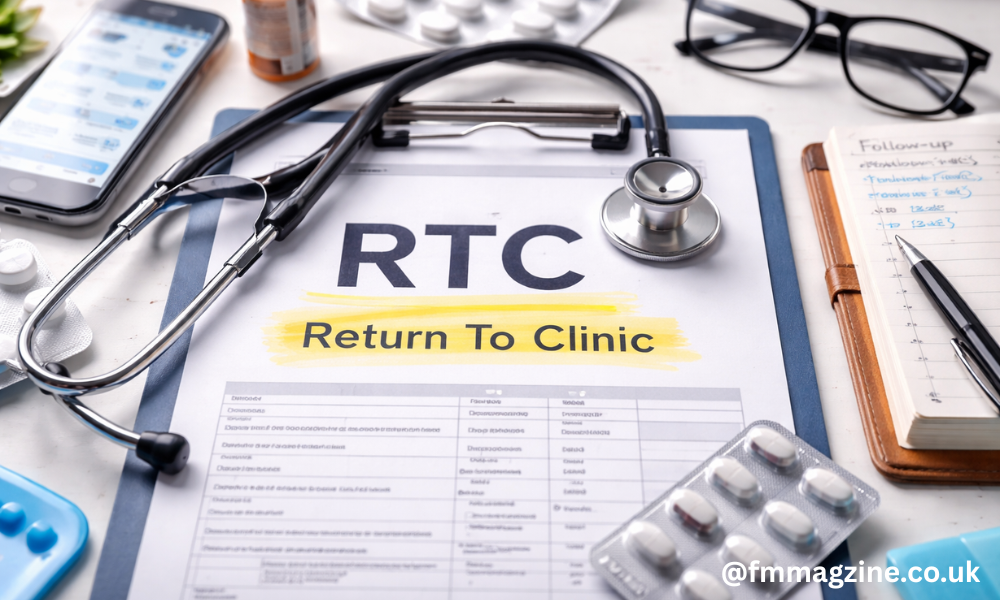
If you recently saw the term “rtc medical abbreviation” in a medical report, discharge paper, or doctor’s note, you are not alone in feeling confused. Medical abbreviations are widely used in healthcare settings to save time and standardize documentation, but they can feel unclear to patients. RTC is one of those short forms that can mean different things depending on the context in which it appears.
In most everyday clinical notes, RTC commonly stands for “Return to Clinic.” However, in trauma cases, mental health settings, or certain regional systems, it may carry a completely different meaning. Understanding the context is the key to interpreting it correctly. This guide explains what RTC means, where you may see it, and how to respond when it appears in your medical documents.
The Most Common Meaning: RTC As “Return To Clinic”
In routine medical practice, RTC most often stands for “Return to Clinic.” Doctors, nurses, and healthcare providers use it to indicate that a patient should come back for a follow-up appointment. Instead of writing out the full phrase every time, clinicians use this abbreviation in the treatment plan or follow-up section of medical notes.
For example, a doctor may write “RTC in 2 weeks” after prescribing medication. This means the patient should return to the clinic in two weeks for evaluation. Sometimes it may appear as “RTC PRN,” which means return to clinic as needed. In this case, the patient should come back if symptoms worsen or new concerns arise.
This usage is very common in primary care, specialist clinics, outpatient visits, and even urgent care follow-ups. In most cases, when you see RTC under a section labeled “Plan” or “Follow-Up,” it almost certainly refers to returning to the clinic for reassessment.
What RTC Means For You As A Patient
When RTC appears in your medical paperwork, it usually represents a clear next step in your care. It is not a diagnosis or a warning sign. Instead, it is a scheduling instruction. It tells you when your healthcare provider expects to see you again to monitor progress, review test results, adjust medications, or ensure recovery is going as planned.
It is important to check the timeframe mentioned next to RTC. If the note says “RTC in 3 months,” mark your calendar and schedule the visit in advance. If no timeframe is provided, it is wise to contact the clinic and confirm the recommended follow-up period. Clear communication prevents delays in treatment.
Patients sometimes ignore RTC instructions because they feel better. However, follow-up visits often serve preventive purposes. Your provider may need to confirm that treatment worked, lab values improved, or no complications developed. Following RTC instructions supports long-term health outcomes.
When RTC Means “Road Traffic Collision”
Although “Return to Clinic” is the most common interpretation, RTC can also stand for “Road Traffic Collision.” This meaning appears more frequently in emergency medicine, trauma documentation, radiology reports, and in certain countries where the term is preferred over “motor vehicle accident.”
In this context, RTC refers to the cause of injury. For example, a trauma report may state that a patient was admitted “following RTC.” This indicates that the patient was involved in a road traffic collision, such as a car crash or motorcycle accident.
You can usually identify this meaning by reading the surrounding text. If the document discusses injuries, imaging results, fractures, or emergency transport, RTC likely refers to a collision rather than a follow-up appointment. Context clues such as references to paramedics, accident scenes, or trauma units make the meaning clear.
RTC In Mental Health And Residential Care
In behavioral health and rehabilitation settings, RTC may stand for “Residential Treatment Center.” This meaning is used when referring to structured, live-in care programs designed for individuals who require intensive support. These facilities often provide therapy, supervision, and specialized treatment for mental health conditions or substance use disorders.
If RTC appears in discharge planning documents or care coordination notes related to mental health services, it may indicate placement in or referral to a residential treatment center. In this case, it does not relate to a clinic visit or accident. Instead, it describes a type of treatment facility.
Again, understanding the overall document helps clarify the meaning. If the paperwork mentions therapy programs, inpatient stays, or structured rehabilitation environments, RTC likely refers to residential care.
How To Identify The Correct Meaning Of RTC
The most reliable way to interpret the rtc medical abbreviation is to examine where it appears in the document. Medical notes are typically organized into sections such as History, Assessment, Plan, Imaging, or Discharge Instructions. The location of the abbreviation often determines its meaning.
If RTC is written under “Plan” or “Follow-Up,” it almost always means return to clinic. If it appears in a trauma or emergency report, especially near descriptions of injuries, it likely refers to a road traffic collision. If it appears in psychiatric evaluations or rehabilitation referrals, it may mean residential treatment center.
Taking thirty seconds to read the surrounding lines usually removes confusion. Medical abbreviations are rarely used randomly. They are tied closely to the topic being discussed.
Real-world Examples Of RTC In Medical Notes
Consider a patient who visits a primary care physician for high blood pressure. After adjusting medication, the doctor writes, “RTC in 4 weeks for BP review.” In this case, RTC clearly means the patient should return in four weeks to check blood pressure levels.
Now imagine a radiology report that says, “CT scan performed following RTC with head trauma.” Here, RTC refers to a road traffic collision. The scan was ordered because the patient experienced head trauma during a traffic incident.
In another scenario, a discharge planner may note, “Family considering RTC placement.” If the document discusses therapy, structured programs, and mental health stabilization, RTC refers to a residential treatment center.
These examples show how the same abbreviation changes meaning based on context. Understanding this principle helps avoid misinterpretation.
Why Healthcare Professionals Use Abbreviations Like RTC
Medical environments are fast-paced and documentation-heavy. Healthcare professionals must record detailed information quickly and consistently. Abbreviations help save time while maintaining standardized communication among providers.
However, abbreviations are primarily designed for clinical efficiency, not patient readability. That is why they sometimes cause confusion. In recent years, many healthcare systems have encouraged clearer communication with patients, especially through online portals. Still, traditional abbreviations like RTC remain widely used.
While abbreviations improve workflow, patients always have the right to request clarification. Asking what a term means does not inconvenience medical staff. In fact, clear understanding improves compliance and health outcomes.
Common Questions About The RTC Medical Abbreviation
Many patients wonder whether RTC indicates a serious issue. In most cases, especially in outpatient care, it does not signal anything urgent. It simply outlines the next appointment.
Another common question is whether RTC always means an in-person visit. Not necessarily. In some cases, providers may use it for telehealth follow-ups as well. The format of the appointment should be clarified directly with the clinic.
Some patients also ask whether RTC is a diagnosis. It is not. It is an instruction or description, depending on context. It does not describe a medical condition.
Understanding these basics reduces anxiety and allows patients to focus on actionable next steps rather than worrying about unknown terminology.
Practical Tips For Handling Medical Abbreviations
Whenever you encounter unfamiliar abbreviations in medical documents, start by reading the full section carefully. Look for clues that explain the surrounding topic. If the meaning remains unclear, use your patient portal to message your provider or call the clinic for clarification.
Keeping a personal health notebook can also help. Writing down common abbreviations and their meanings creates a reference you can use in future visits. Over time, you may become more comfortable reading medical notes.
Most importantly, never ignore follow-up instructions. If RTC refers to returning to clinic, schedule the appointment promptly. Consistent follow-up plays a key role in preventive care and long-term health management.
Conclusion
The rtc medical abbreviation most commonly means “Return to Clinic,” especially in routine outpatient care. However, depending on context, it may also stand for “Road Traffic Collision” in trauma settings or “Residential Treatment Center” in mental health care. The surrounding text, document section, and overall medical context determine its correct interpretation.
Understanding medical abbreviations empowers patients to take an active role in their healthcare. If you ever feel uncertain about what RTC means in your specific situation, reach out to your healthcare provider for clarification. Clear communication ensures that you follow the correct next steps and maintain confidence in your care plan.
FAQ’S:
What Does RTC Mean In Medical Terms?
RTC most commonly means “Return to Clinic.” It indicates that a patient should come back for a follow-up appointment within a specified timeframe.
Is RTC A Diagnosis?
No, RTC is not a diagnosis. It is usually an instruction for follow-up care or, in some contexts, a description of an event such as a road traffic collision.
Does RTC Always Mean An In-Person Visit?
Not always. RTC can refer to either an in-person appointment or a telehealth follow-up, depending on what your healthcare provider has arranged.
Can RTC Mean Something Other Than Return To Clinic?
Yes. In trauma settings, it can mean “Road Traffic Collision,” and in mental health contexts, it may stand for “Residential Treatment Center.”
What Should I Do If I Don’t Understand RTC In My Report?
Read the surrounding section for context and contact your healthcare provider or clinic if the meaning is still unclear. Clear understanding helps you follow the correct next steps.
Looking for more? Browse other articles on the site.
Disclaimer
The information provided in this article about the rtc medical abbreviation is for general educational and informational purposes only. It is not intended to replace professional medical advice, diagnosis, or treatment. Medical abbreviations can vary depending on the healthcare setting, region, and individual provider, so the meaning of “RTC” may differ based on context.